
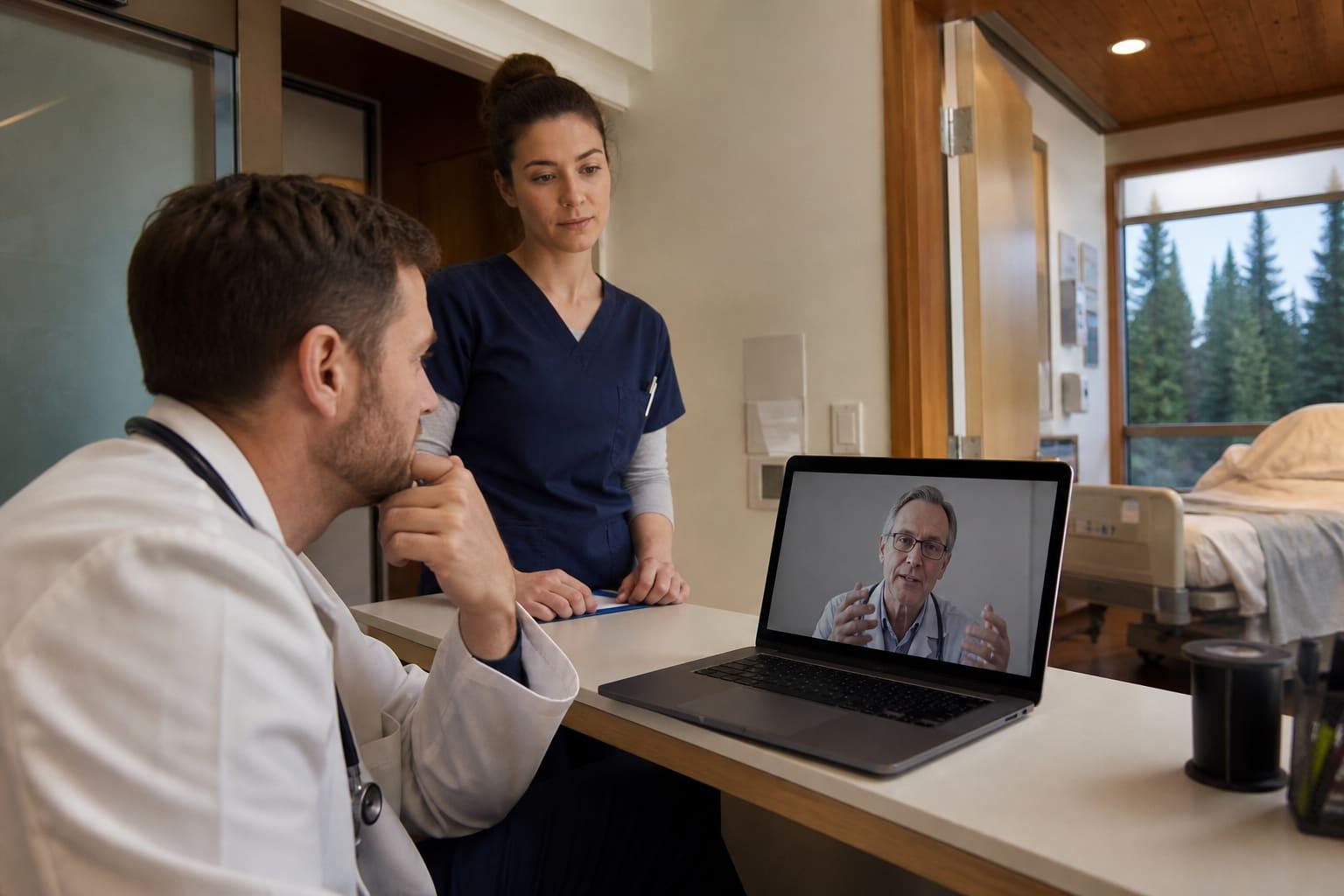
Digital Health Canada’s May 6, 2026 Webinar Wednesday focused on hybrid care models designed to support rural healthcare teams through virtual physician services. The session examined how remote clinical support can help healthcare organizations address workforce shortages, coverage challenges, and physician burnout.
Hybrid care allows physicians and other healthcare professionals to contribute remotely while maintaining an on-site clinical team for services that require a physical presence. This approach can provide additional capacity without requiring every healthcare professional to be physically located at the same facility.
The effectiveness of hybrid care depends on reliable technology, access to appropriate patient information, clear communication between remote and on-site teams, and well-defined clinical responsibilities. Remote clinicians must be able to assess patients and contribute meaningfully to care rather than simply providing delayed advice.
Rural communities can particularly benefit from models that expand access to healthcare professionals beyond the limitations of local workforce availability. Virtual care can complement in-person services while helping healthcare systems maintain continuity of care in areas where recruiting and retaining clinicians can be challenging.
Speakers
- Jennifer Brunet, Clinical Operations Supervisor, Teladoc Health
- Health System Partnerships team, Teladoc Health Canada
Takeaways
- Hybrid care models can extend clinical capacity and support rural healthcare teams.
- Effective remote coverage requires reliable technology, communication, and clearly defined clinical responsibilities.
- Virtual healthcare can complement in-person services and help address workforce and access challenges in rural communities.